
 | ||
Introduction
Welcome to the SCView Financial Dashboard, a cutting-edge tool designed to revolutionize your approach to financial management and data visualization. With our intuitive platform, you'll seamlessly integrate diverse financial data points and interactive elements, granting you real-time insights into your organization's financial landscape. Monitor cash flow, analyze year-to-date performance, and forecast future revenues and expenses with ease. Our dashboard empowers you with detailed financial oversight and enables strategic decision-making.
A. Problem Statement
In today's fast-paced business environment, managing vast amounts of financial data can be overwhelming, leading to delayed decision-making and potential inaccuracies in financial assessments. Organizations often struggle with disjointed data sources, lack of real-time visibility, and inefficient reporting mechanisms.
B. Solution
The SCView Financial Dashboard addresses these challenges by providing a unified platform for financial data visualization and management. With features like interactive data tabs, customizable reporting, real-time updates, and drill-down capabilities, users can effortlessly access and interpret critical financial data, leading to more informed and timely decisions. By integrating dynamic visual tools and configurable elements, the dashboard ensures that organizations can tailor the experience to their unique needs, optimizing financial oversight.
The dashboard provides an overview of the cash position using detailed and summary financial data. It features key components such as:
- Visual Displays: Current posting period and client information are displayed above interactive tabs.
- Functional Buttons: Buttons enable returning to the SCView website, refreshing Dashboard Data from USAS, and printing options for selected tabs.
- Information Sections: Includes notifications, a dashboard grid, and graphs for monthly revenue/expenses/ net income comparisons, among others.
- Specialized Charts and Data: View Top 10 Funds, Salary summaries, Maintenance of Effort, Stock/Bond information, STAR Ohio/PLGIT rates, and unemployment data specific to the client's county.
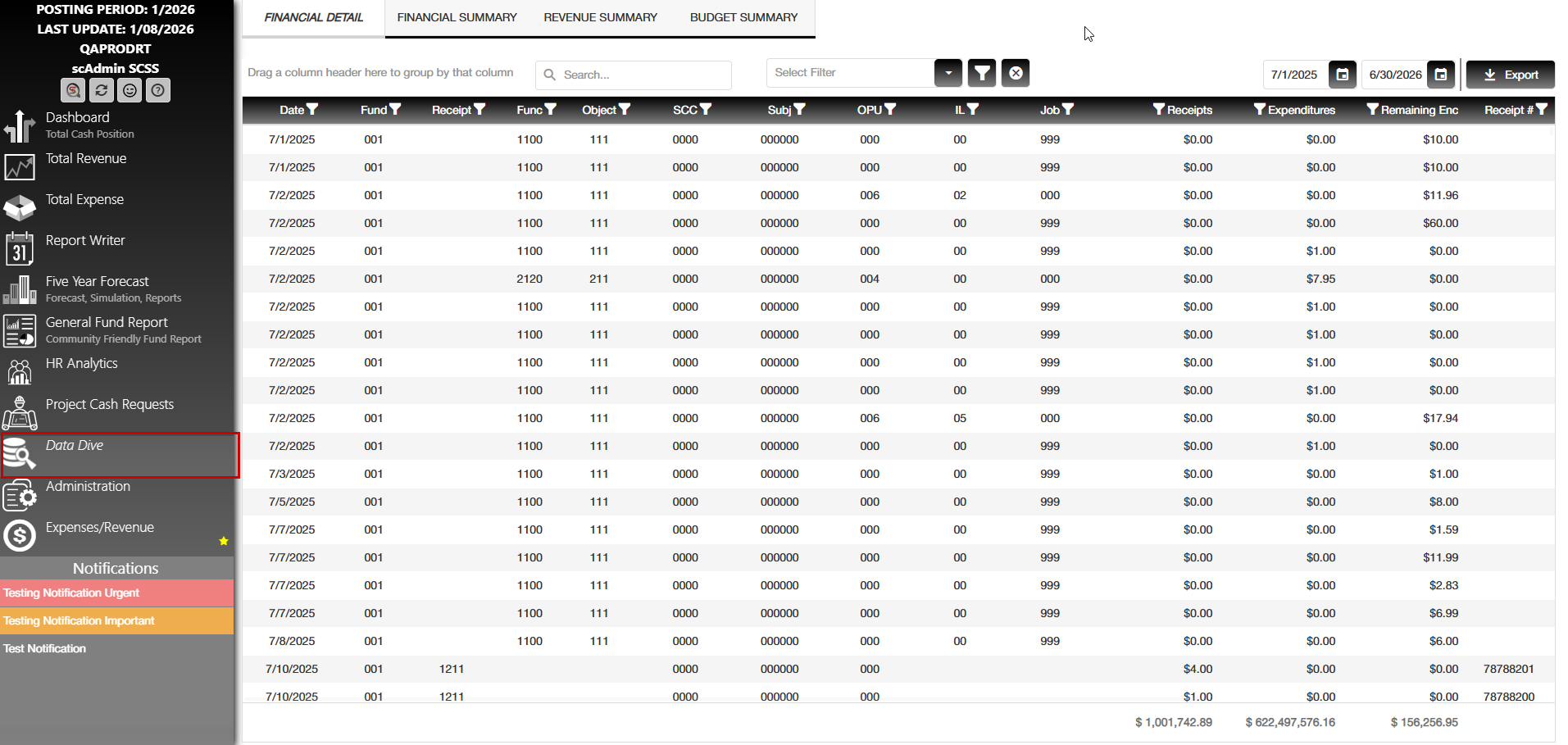
Data Dive
Offers insights into financial details with capabilities for strong data manipulation and export functionalities. This tab is found in the left side navigation menu.
Revenue Summary & Budget Summary
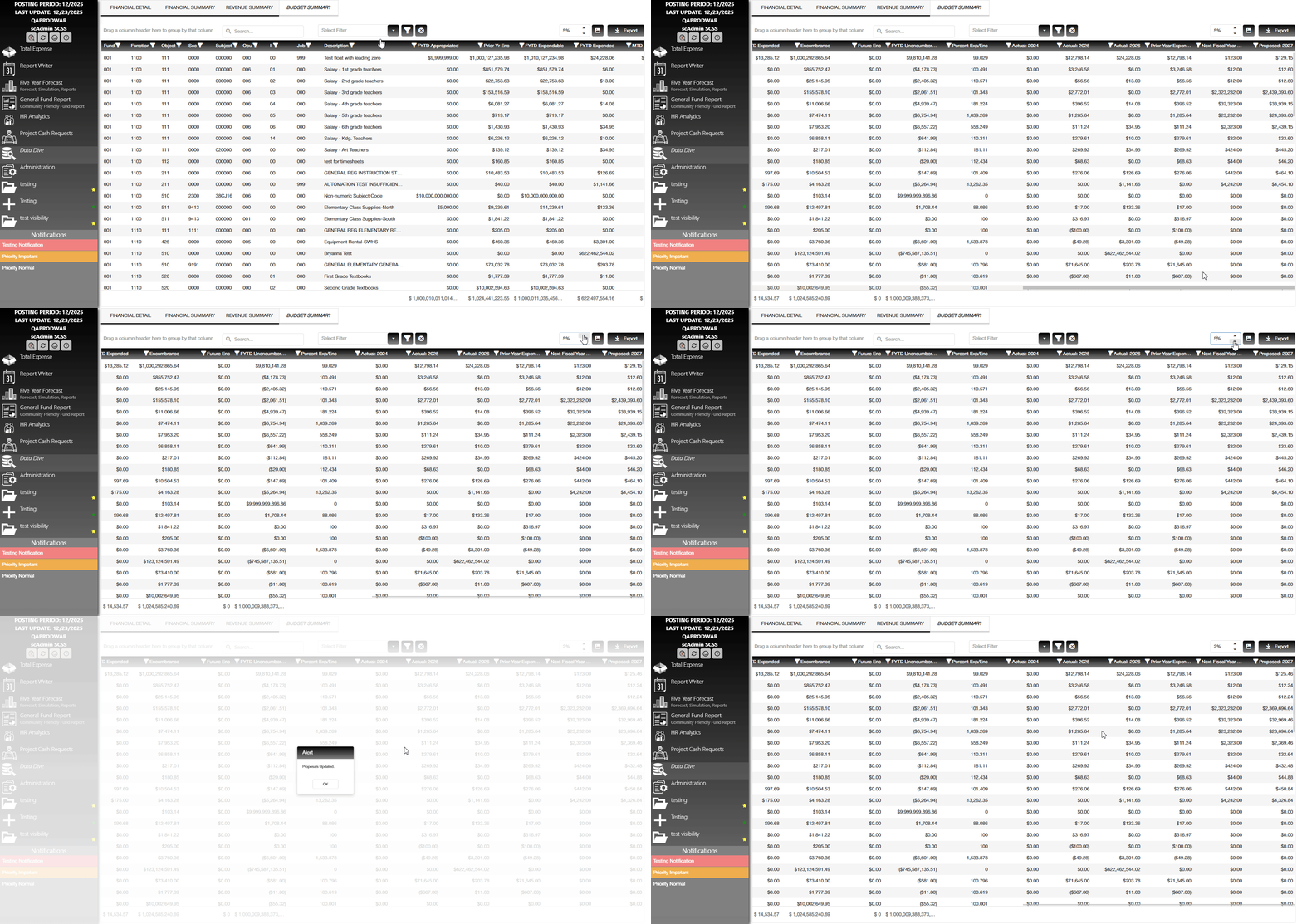
The budget summary tab tracks budgetary allocations versus expenditures with visual comparisons and detailed account coding.
In both the Revenue and Budget tabs the far right of the grid displays a proposed amount for the next following year. The percent textbox will allow you to adjust the percentage to change the proposed (year) amount column. The amount can only be changed with the percentage if there are amounts present in the column.
Editable Budget Proposals: Users can manually update proposed budget values for the next fiscal year
- Budget Summary: Apply percentage increase to each row based on Prior Year Expended
- Revenue Summary: Apply percentage increase to each row based on Prior Year Received
All tabs in the Data Dive screen can be exported to an excel sheet.
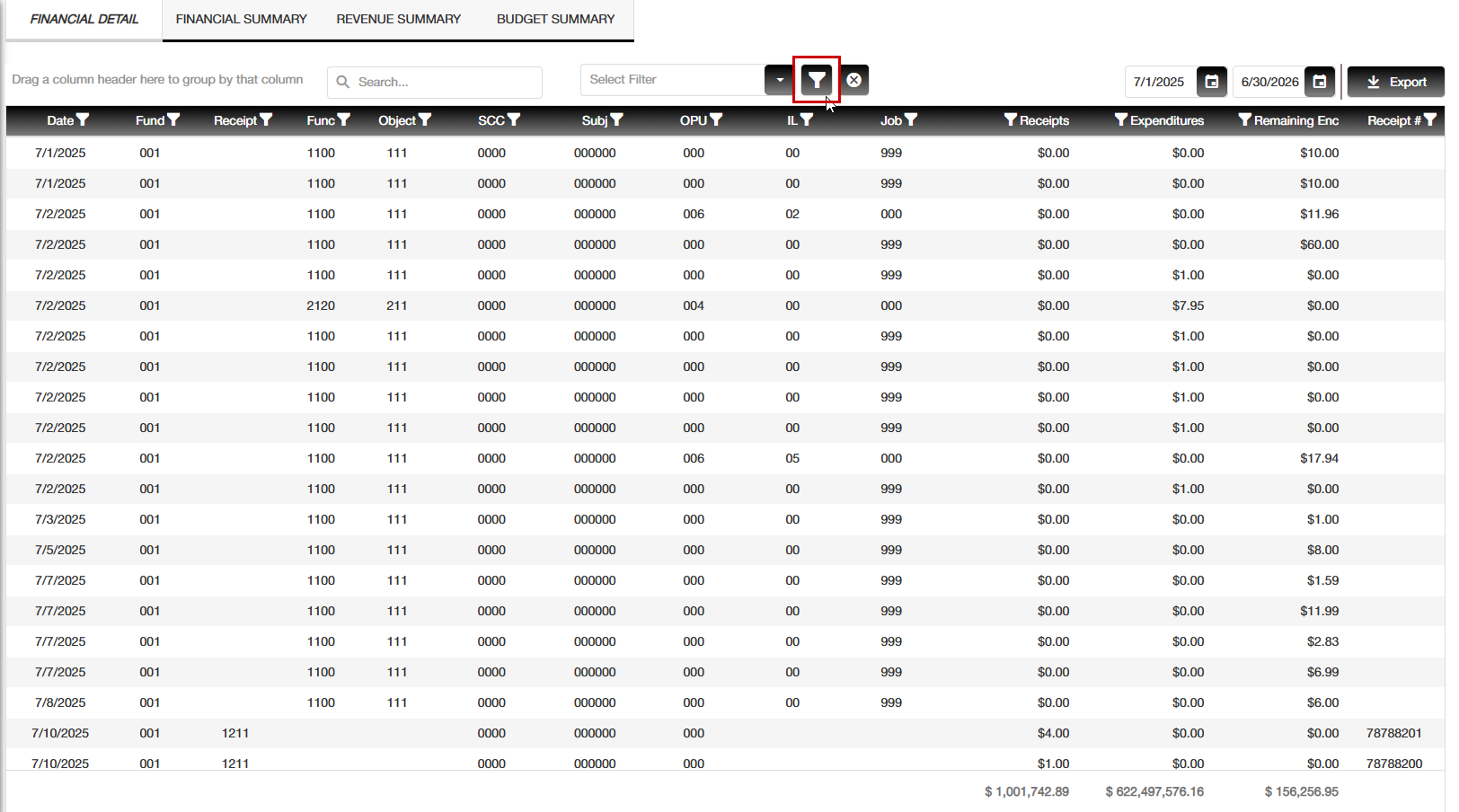
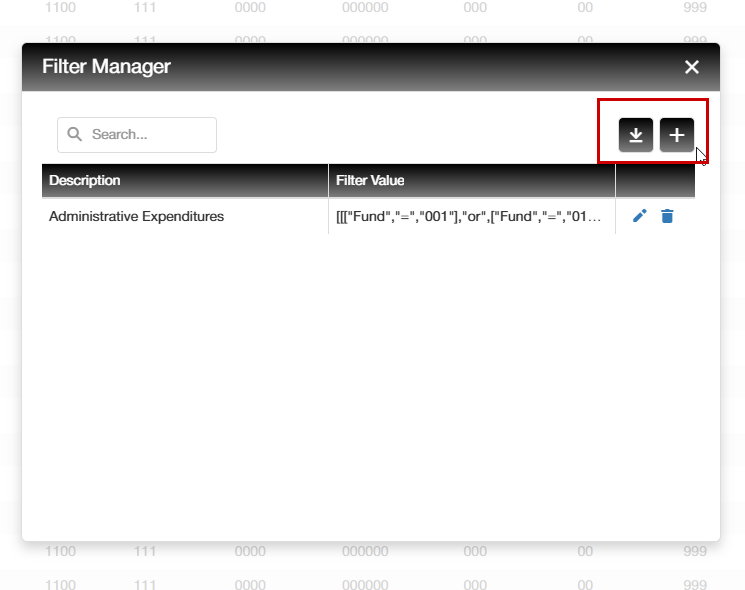
Create your own filters to use. You can create filters using the funnel button. From there click the "+" sign button and give it a description of whatever you like and create the filter value. All filters can also be exported to excel.
C. Best Practices
- Regularly Refresh Data: Utilize the functional buttons to frequently update the dashboard with the latest data from USAS to ensure you're working with the most current information.
- Leverage Custom Reporting: Take advantage of the customizable reporting tools to create targeted reports that cater specifically to your organization's needs. Use filters and groupings to refine your data further.
- Engage with Visual Tools: Use graphs and charts to gain quick insights into monthly and yearly financial trends. Visual tools can enhance the readability of complex financial data.
- Drill Down for Details: Utilize the drill-down functionality to explore detailed data beneath summary figures. This deeper dive can uncover insights that might be missed in a high-level overview.
- Monitor Real-Time Notifications: Stay vigilant with real-time updates and notifications. Keeping abreast of significant changes or alerts ensures proactive financial management.
- Customize Your Dashboard: Use the configurable elements to tailor the dashboard interface and functionalities to better meet your organizational needs, optimizing user experience and accessibility.
D. Troubleshooting
- Data Not Updating: Ensure that the dashboard is connected to the internet, and check if there's an issue with the USAS data source. Use the refresh button to attempt re-syncing the data.
- Incorrect Report Outputs: Revisit the custom report settings for any misconfigurations. Verify filters, groupings, and date ranges to ensure correctness.
- Display Issues: If graphs or charts are not displaying correctly, refresh the page or clear the browser cache. Ensure your browser is up to date for optimal performance.
- Access Problems: If users are unable to access specific dashboard features, verify user permissions and access rights in the administration settings.
- Notification Errors: Check the notification settings to ensure that alerts are properly configured and enabled.