 | ||
Introduction
This guide will walk you through the complete process of implementing account filters, from initial user verification through final configuration, while addressing common challenges and providing best practices developed from real-world implementations. Whether you're setting up filters for a single user or implementing an organization-wide access control strategy, this documentation provides the technical details and practical insights needed for successful deployment.
A. Problem statement
When users have unrestricted visibility to all accounts within FIS and USAS systems, organizations face a multitude of operational, security, and compliance challenges that impact efficiency and financial integrity. Users with broad access can inadvertently view and select accounts outside their departmental responsibilities, exposing sensitive financial data while violating the principle of least privilege and making regulatory compliance nearly impossible to enforce.
B. Solution
Step 1:
Verify the user has a USAS or FIS user account configured.
NOTE: When adding an ExtName to users in SCView, the user must have the 'USAS_RO'
permission enabled.

Be advised, if the user also has 'Allow Negative Budget' enabled, this will override
the SCView user permission 'Allow Over Budget' on the FIS tab. This will allow users
to submit overbudget requisitions despite not having the permission enabled in SCView.
Step 2:
Verify that account has an Account Filter applied to it.
Step 3:
Copy the Username from USAS or your FIS system.
Step 4:
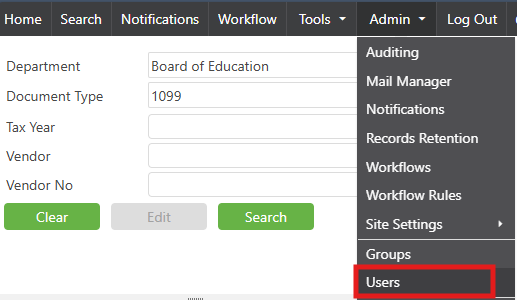
In SCView, Navigate to Admin > Users.
Step 5:
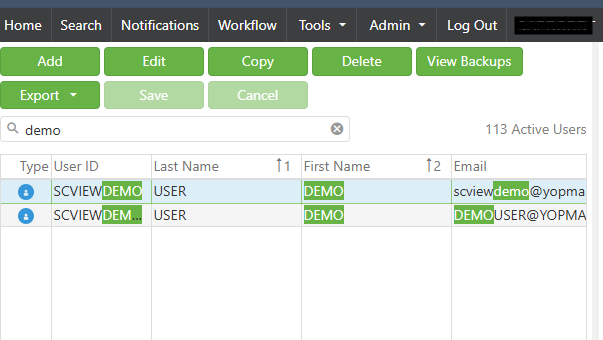
Locate the user you would like to apply the filter to.
Step 6:
Click Edit on that User, or double click the user on the grid.

Step 7:
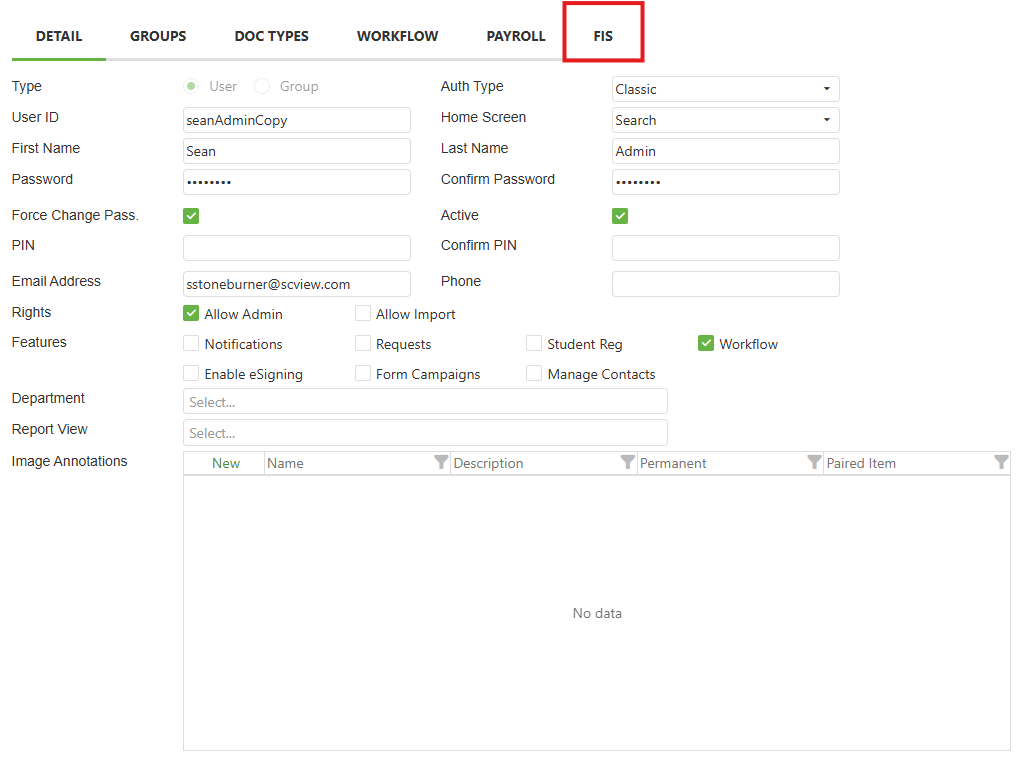
Select the FIS tab.
Step 8:
Enter the USAS or FIS username in the EXT Name field.

Step 9:
Save the User.
C. Best Practices
Account Filters are a wonderful solution to limit errors on items where accounts apply. They assist the end user in having a limited list of accounts that they know they are allowed to use.
D. Troubleshooting
The most common issues are either the EXT Name being disabled or not existing. You will want to make sure that prior to this configuration the user has a USAS or FIS account setup and configured correctly with the USAS_RO permission.
E. Related Articles
Users - Change owner or requestor
Users: User Manager - Add and Edit
Conclusion
In summary, setting up account filters in SCView is a straightforward process that enhances security and user efficiency. By verifying user accounts, applying account filters, and ensuring correct EXT Name entry, administrators can restrict user access to relevant financial data with ease. Regularly following these steps and troubleshooting common issues ensures a smooth and secure user experience within SCView.
Was this article helpful?
That’s Great!
Thank you for your feedback
Sorry! We couldn't be helpful
Thank you for your feedback
Feedback sent
We appreciate your effort and will try to fix the article