 | ||
Introduction
SCView provides a robust platform for managing documents within an organization, particularly with functionalities that allow users to create new documents and append to existing ones effectively. Understanding how to navigate and utilize the document creation and appending features is crucial for maintaining an organized and efficient digital workspace. This guide details the process of adding new documents and appending pages to existing documents using SCView's search functionalities.
A. Problem Statement
Managing digital records can be challenging, especially when it involves creating new documents or appending existing ones with additional pages or information. Users often face difficulties in navigating these processes efficiently, which can lead to issues such as misplaced documents, improperly indexed data, or duplicated records. Such challenges can disrupt the flow of information and affect the accuracy of data management within the organization.
B. Solution
SCView addresses these challenges by offering streamlined processes to create new documents and append to existing ones through clear, step-by-step options under the Search tab. Whether adding new pages without additional details or appending pages while updating document information, SCView simplifies these tasks with user-friendly interfaces and multiple appending options, enhancing document management's effectiveness and reliability.
Creating a New Document
1. Go to the Search tab and click the first icon in the top right section where images are displayed.
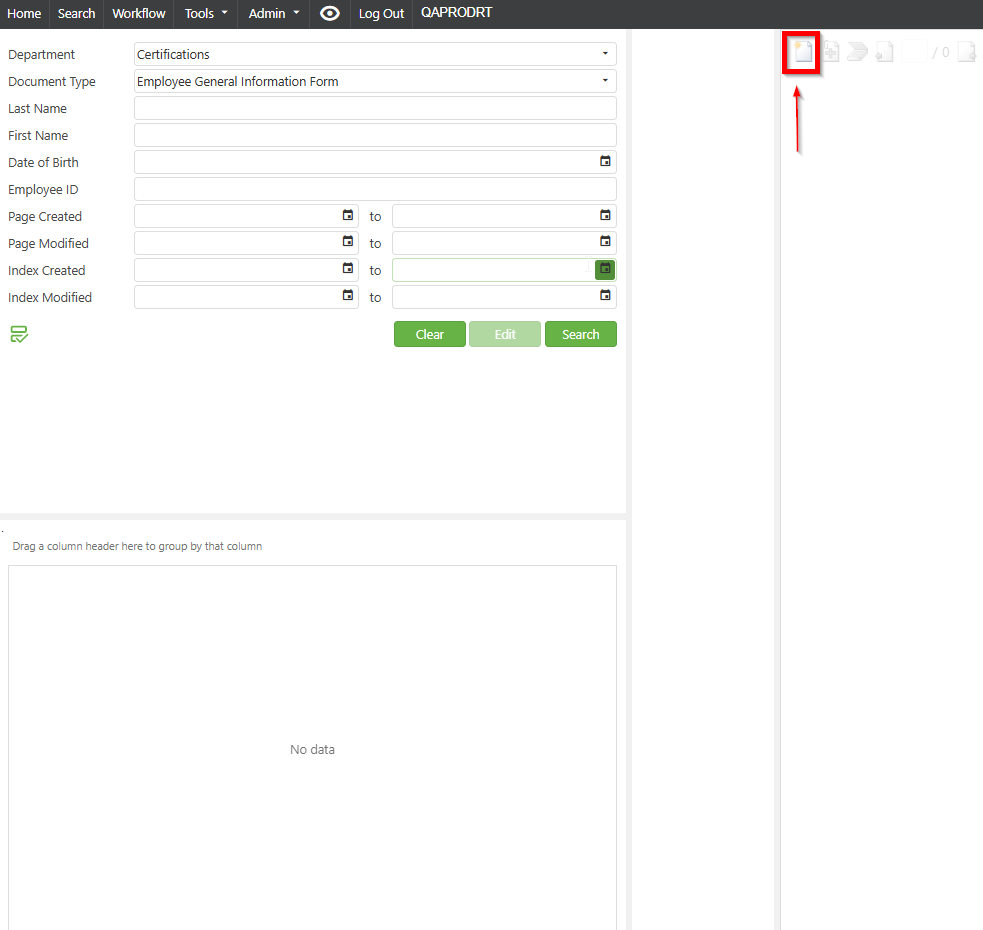
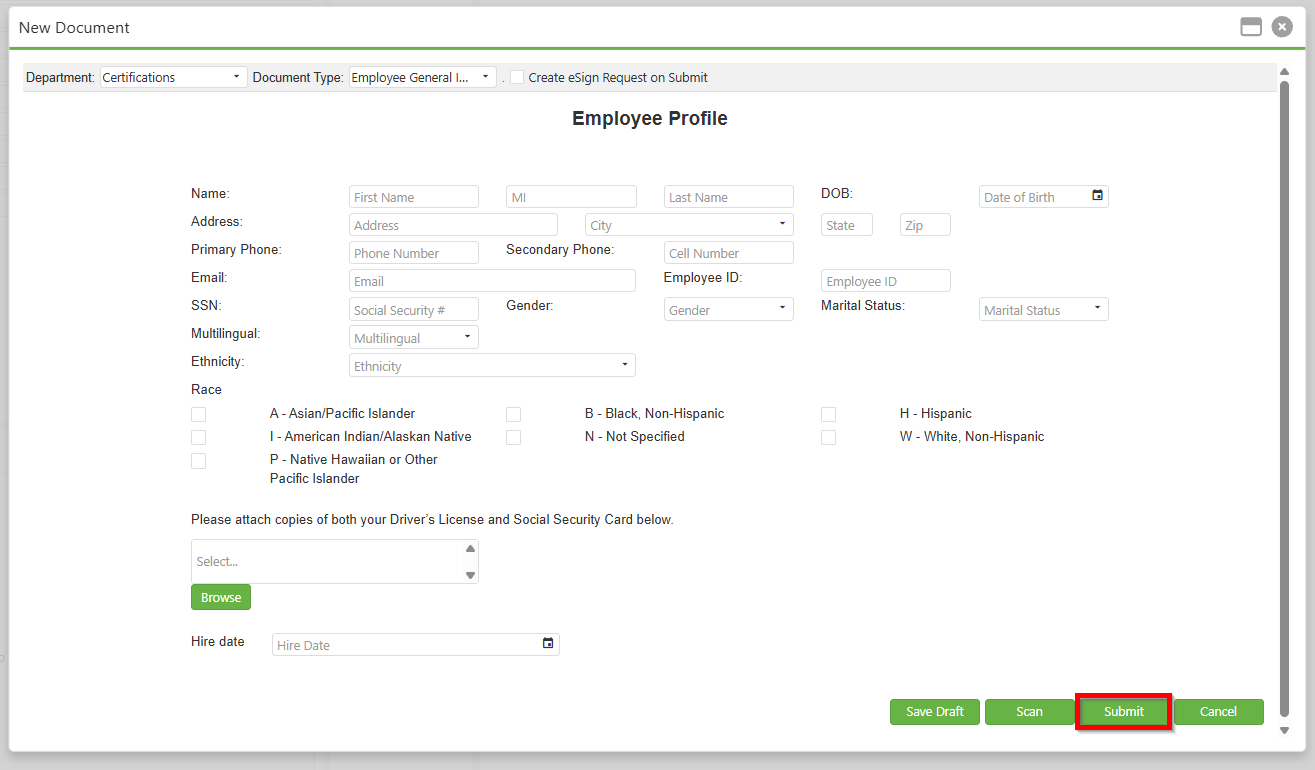
2. Select Doc Type we wish to create.
3. Enter data in the fields as needed and click the Browse button to find your attachments.
4. Click "Submit" and or "Save".
Appending to Existing Documents:
We have 2 options when appending documents. We can just append pages without adding any additional information into the fields through Option 1 below, or we can append pages as well as enter additional information under Option 2.
Both options are found under the Search tab.
Option 1: Appending only to add pages:
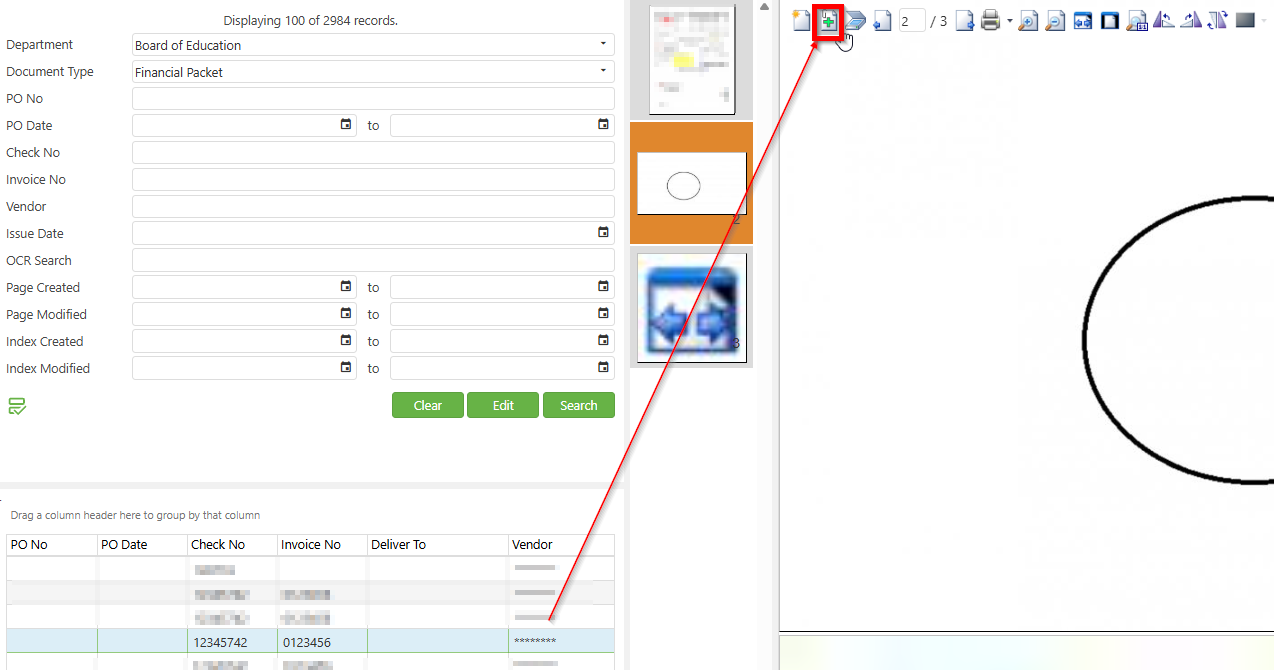
1. This option is for when we are only adding pages as records and do not need to enter additional information for these pages. We will open a document from the Search tab by double clicking the result to display the existing pages. If we don't load the document, the append option will not be available.
2. Then click on the Append Pages button which is the icon with a plus symbol. When we click this button, it will open a folder view of files on your computer to choose the page or pages to add. Once the files are selected, click the Open button.

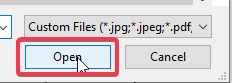
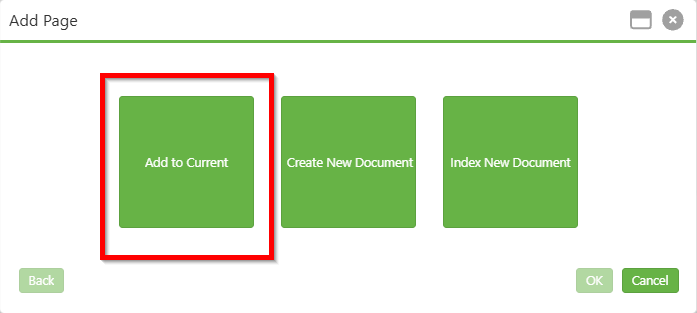
There is also a drag and drop option if you have the folder opened on your computer already. When dragging and dropping, it will ask if you want to Append to the Current Document or create a new document by clicking on the document type available.
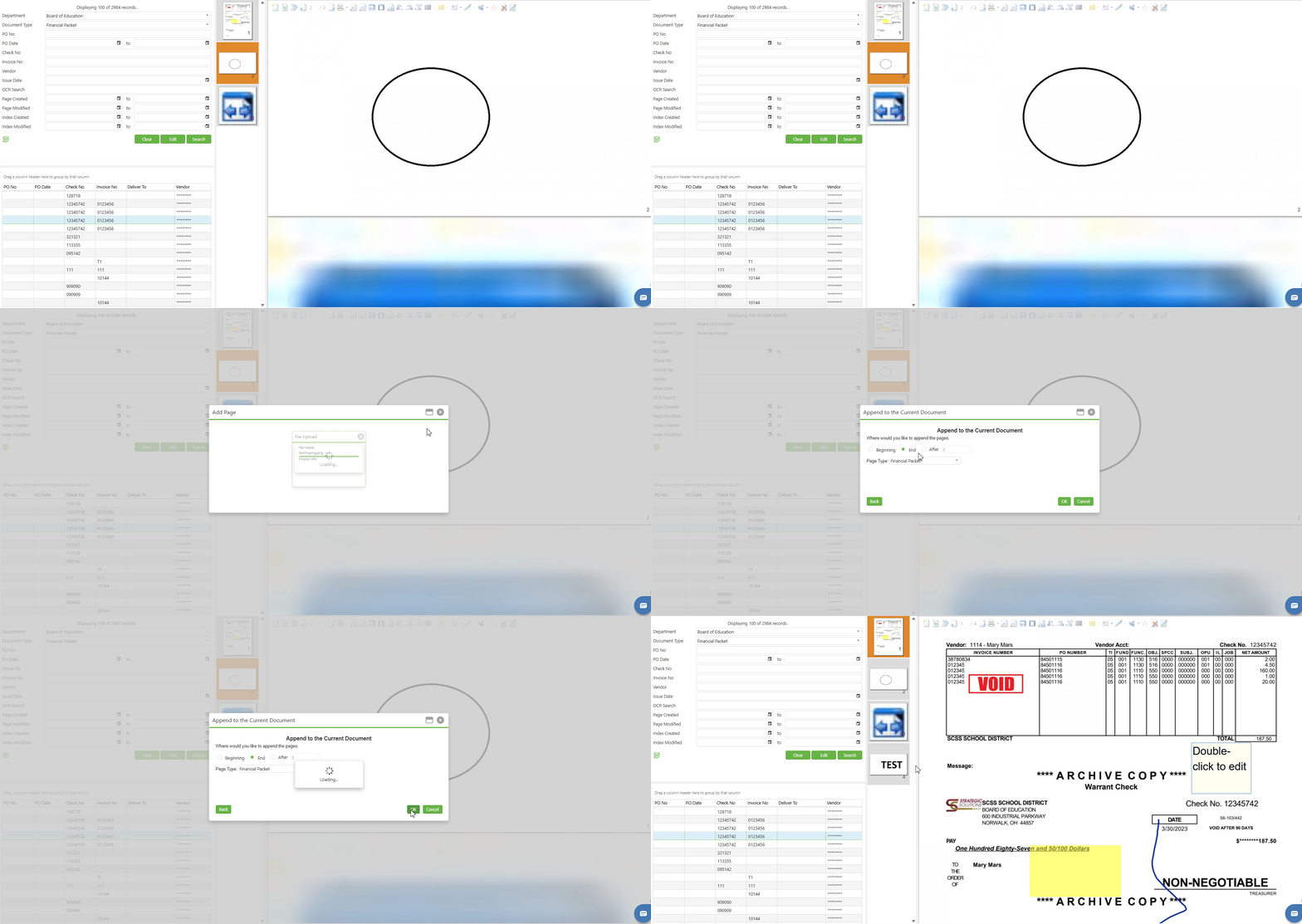
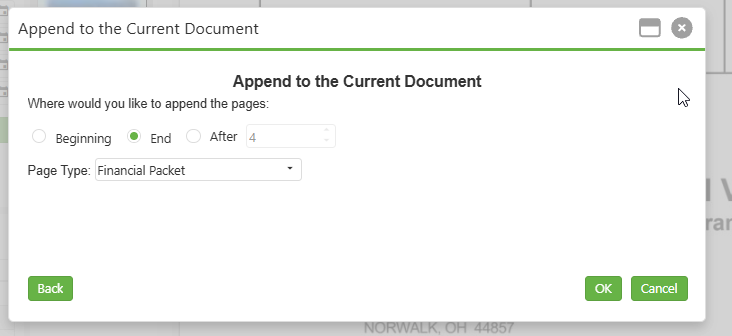
3. Choose to append the page to the Beginning, End, or After a specific page number. Once we click OK, the page will be added to the document and the task is complete.
Note: There is a Page Type selection that will have multiple choices available if we are using the Financial Packet, but it will best to use Option 2 if we are adding Invoices that need to have all of the invoice details.
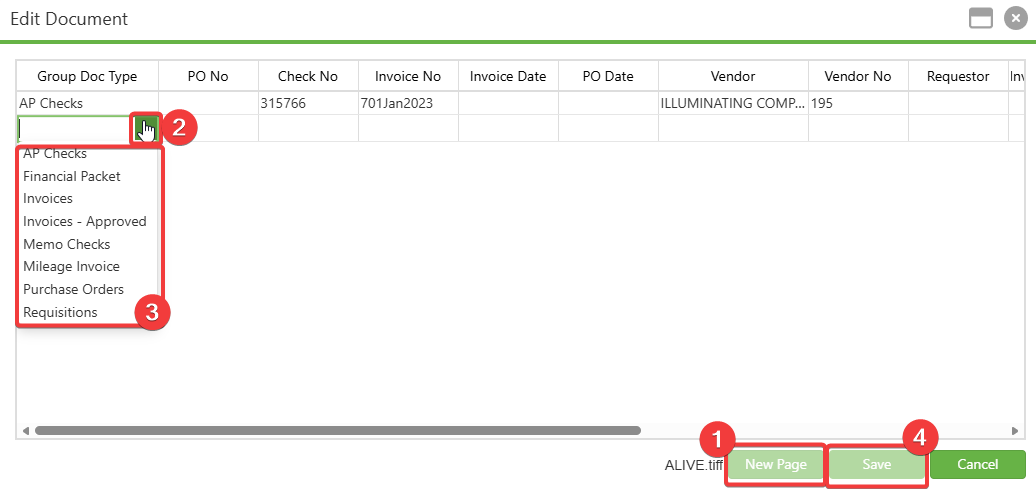
Option 2: Appending Pages to an Existing Document and Indexing
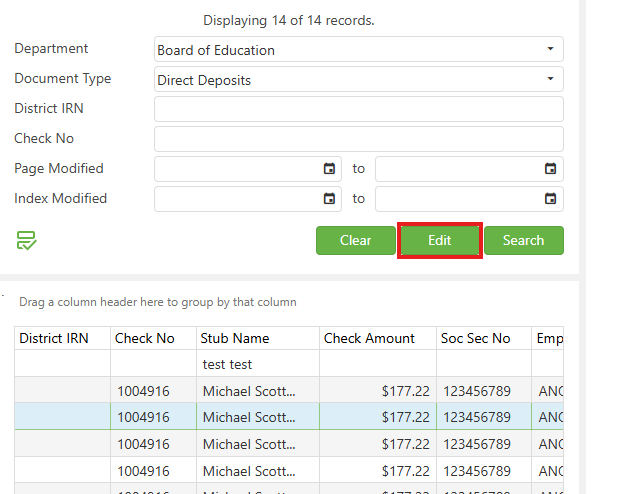
First, highlight a document from the Search results and then click the Edit button.
1. Click the New Page button. This calls up a standard upload dialog; select a file to continue.
2. A new row appears in the grid. Click the Group Doc Type dropdown.
3. Select a document type.
4. Click Save to save the appended page.
If a document type index is assigned a Fill Mode of Multi-Value and that document type has no children document types with the same index, then that index will display as tagboxes.
C. Best Practices
- Accurate Data Entry: Always ensure that all information entered during document creation or appending is accurate to maintain data integrity.
- Regular Document Audits: Conduct periodic reviews of documents to ensure that all records are correctly created and appended, and to rectify any inconsistencies.
- Efficient File Organization: Utilize clear and consistent naming conventions for documents and maintain organized records to facilitate easy access and retrieval of information.
- Training and Guidelines: Provide regular training for users on how to effectively use SCView for creating and appending documents to ensure everyone is proficient with the system functionalities.
D. Troubleshooting
- Issues with Saving Documents: Ensure that all required fields are filled out before attempting to save a document. Check your internet connection and browser compatibility if problems persist.
- Appending Errors: If the append function is not available or not working, make sure the document is properly loaded and opened from the Search results. Verify that the correct document is selected and that the user has the necessary permissions to modify it.
- File Upload Problems: If there are issues uploading files during the appending process, check the file size and format to ensure compatibility with SCView's requirements. Try refreshing the platform or clearing the cache if the problem continues.
E. Related Articles
Search: OCR Search Functionality
Conclusion
The ability to efficiently manage document creation and modifications is vital for any organization aiming to maintain an effective digital document management system. SCView provides essential tools that allow users to handle these tasks with ease and precision. By following the outlined best practices and utilizing the troubleshooting tips provided, users can effectively leverage SCView's functionalities to enhance their document management processes, ensuring organizational data is accurately and securely managed.
Was this article helpful?
That’s Great!
Thank you for your feedback
Sorry! We couldn't be helpful
Thank you for your feedback
Feedback sent
We appreciate your effort and will try to fix the article